
Why Climbing Trees Builds Stronger, Braver Kids
Physical play does more than burn energy. Climbing, balancing, and scrambling build the muscles, coordination, and confidence children carry for life.
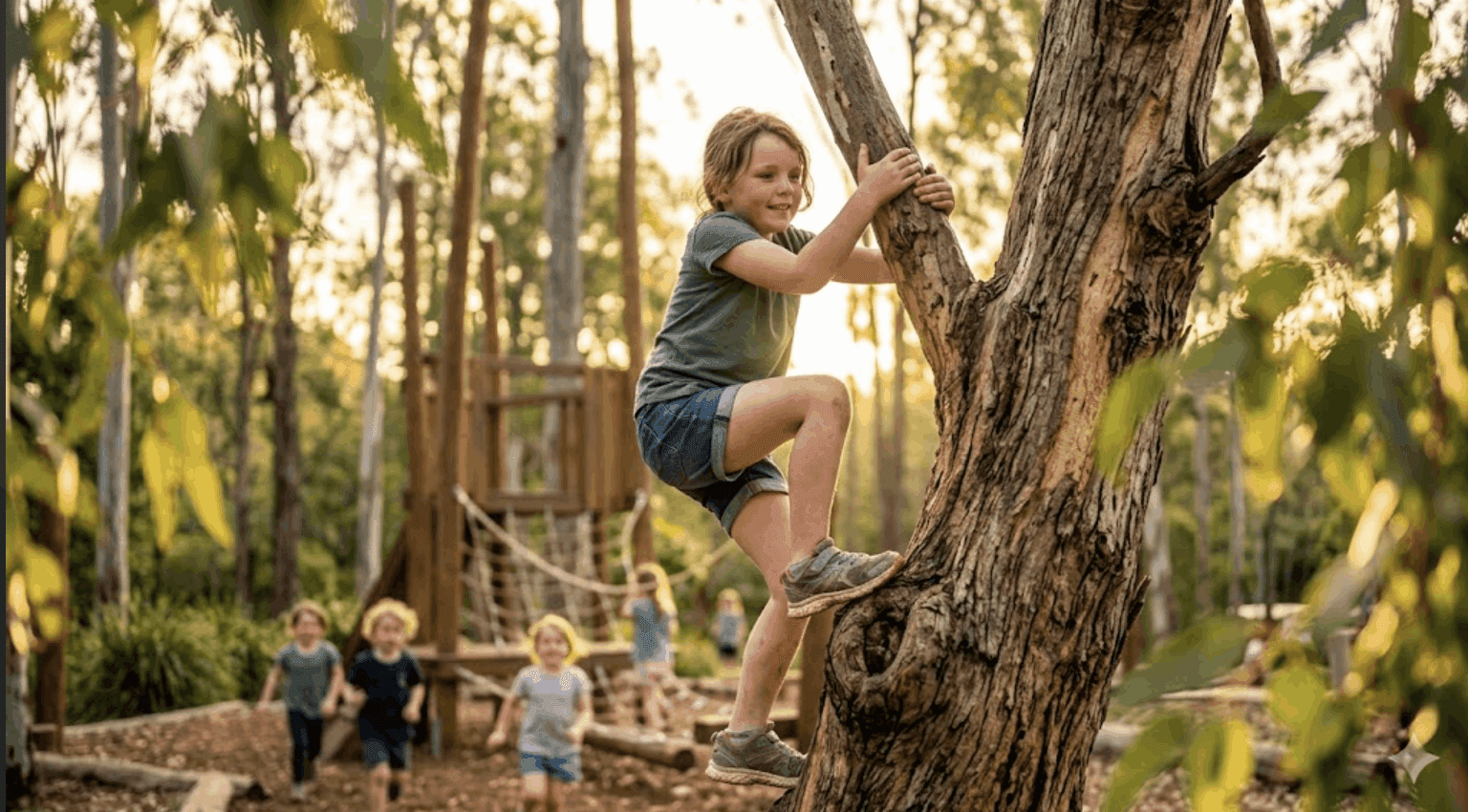
When a child hauls themselves up onto the first branch of a tree, something more important than exercise is happening. They are wiring their brain and body together — learning where their limbs are in space, how much force a grip needs, and how to trust their own strength.
Movement is how bodies learn
Young children are built to move. Every climb, hang, jump, and roll feeds the vestibular and proprioceptive systems — the senses that tell a child where their body is and how it is moving. These systems are the foundation for everything from sitting still at a desk to catching a ball.
When play is active and varied, children develop:
- Gross motor strength in the legs, core, and shoulders
- Coordination between hands, eyes, and feet
- Balance and spatial awareness that prevents injuries later
- Cardiovascular fitness that sets up lifelong healthy habits
The strength you cannot see
The most valuable thing a child gains from physical play is often invisible: a felt sense of "I can do hard things with my body." A child who has climbed to the top of the climbing frame has a different relationship with challenge than one who has only ever been told to be careful.
Physical confidence built in childhood becomes resilience that shows up everywhere — in sport, in social courage, and in a willingness to try.
What this looks like at the park
You do not need special equipment. The best physical play is messy and self-directed:
- Climbing, hanging, and swinging on anything safe enough to support them
- Running, chasing, and changing direction at speed
- Carrying, dragging, and lifting heavy-for-them objects like logs and buckets
- Balancing along low walls, logs, and curbs
Let them set the pace. The child who chooses their own physical challenge is learning to read their own limits — and that is a skill no coach can teach.