
Why a Bounce Is Never Just a Bounce: The Hidden Benefits of Trampoline Parks
While your kids think they're just bouncing, their brains and bodies are doing serious growing-up work. Here's why a trampoline park is one of the richest play experiences for 2–12 year-olds — and a balanced word on bouncing safely.
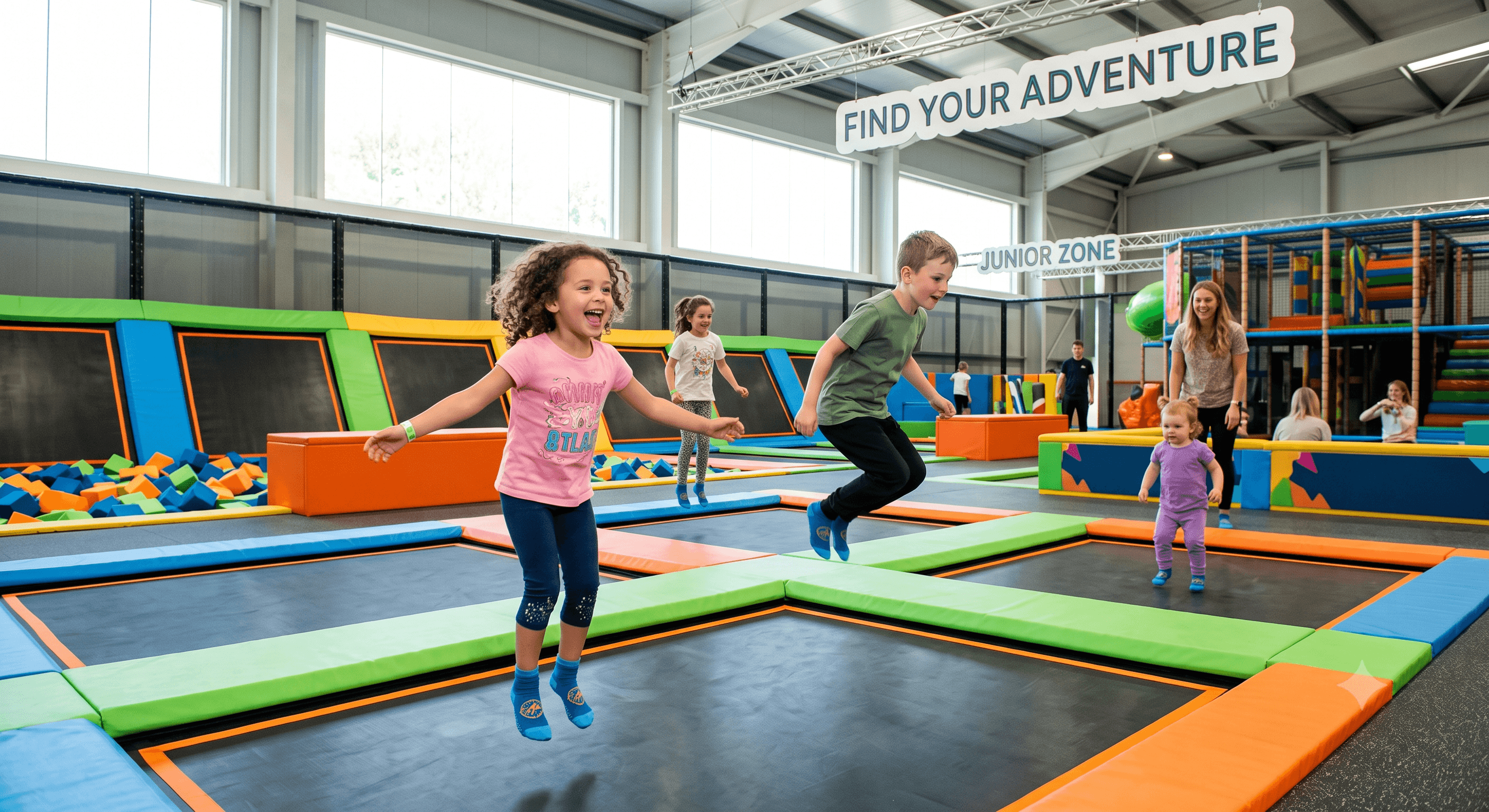
If you've ever watched your child's face light up the moment their feet leave a trampoline, you already know something powerful is happening. Here's the lovely secret: while your kids think they're just bouncing, giggling and racing their mates, their brains and bodies are quietly doing some seriously important growing-up work.
At Adventure Atlas, we believe play is development. So let's unpack why a trip to your local trampoline park is one of the richest play experiences you can give a 2–12 year-old — and why coming back again and again (sticker by sticker) matters even more.
Big jumps build big skills
Every bounce is a tiny balance puzzle. Because a trampoline surface is springy and never quite still, your child's body must constantly adjust — firing the muscles in their feet, legs, core and back to stay upright. A 2026 research review of trampoline training in children concluded that it genuinely enhances balance, postural control and lower-limb strength. That's the same balance and bilateral coordination (getting both sides of the body working together) that later helps with running, climbing, riding a bike — and even sitting still to write.
Body radar: spatial and body awareness
Bouncing gently floods two quiet-but-crucial senses: the vestibular system (which tells us where our head is in space) and proprioception (which tells us where our body parts are without looking). That up-down rhythm, plus the satisfying thud of landing, helps children build a clearer internal map of their own bodies. It's exactly why occupational therapists so often reach for a trampoline — movement that feels like pure fun doubles as brilliant, motivating "body radar" practice.
Hearts, muscles and growing bones
Jumping is a joyful cardio workout. It gets hearts pumping, strengthens muscles from toes to tummy, and — because it's weight-bearing — helps support healthy, growing bones. A well-known NASA study even found bouncing can be a remarkably efficient form of exercise: at the same oxygen use, trampolining produced markedly more physical "work" than running. For kids who'd rather flop on the couch than "do exercise," a trampoline park sneaks in a full-body workout disguised as the best afternoon ever.
Confidence, calm and friendship
Nailing a new bounce, a controlled landing, or finally keeping up with a big sibling gives children a genuine hit of "I did it!" pride. Add the endorphins from all that movement, and you get a happier, more settled mood. Trampoline parks are also little social classrooms: waiting for a turn, sharing space, cheering each other on. And for many children — including those who are sensory-seeking or have additional needs — that big, rhythmic movement can feel wonderfully organising and is a brilliant way to let off steam.
A balanced word on safety
We'd never gloss over this. Trampolines do carry real injury risk, and the evidence is clear on how to bounce smart: one jumper per trampoline (most injuries come from "double bouncing"), no somersaults or flips, and active grown-up supervision. Paediatric guidance — including Australia's Raising Children Network — recommends that children under 6 don't use standard trampolines, which is exactly why good trampoline parks run dedicated toddler and junior sessions that keep little ones away from bigger, faster jumpers.
The reassuring part: a large study published in Pediatrics found that at standards-compliant parks, injuries are uncommon and have actually been declining — with rates that compare favourably to popular sports like netball and AFL. Choose a park that's a member of the Australian Trampoline Park Association, follow the session rules, and let them fly.
Make it a habit — and collect the stickers
Here's the thing about all these benefits: they grow with repetition, not one-off visits. Balance, confidence and coordination build over time, the way any skill does. That's where your Adventure Atlas passport comes in.
It's as easy as 1-2-3: find a trampoline park near you, check in when you arrive, and earn a passport sticker your child can proudly collect. Each sticker is a little badge of an active, growing day — and a gentle nudge to come back and keep the good stuff going.
So go on. Find your next adventure, sock up, and let them bounce their way to stronger bodies, braver hearts and brighter days.
Discover a trampoline park near you and check in today.